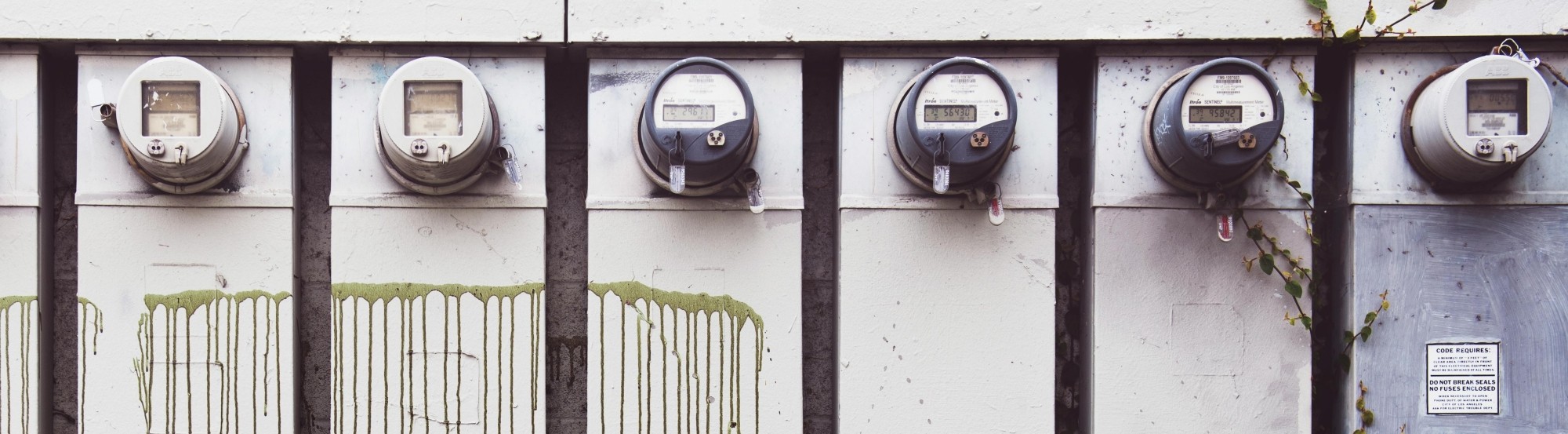
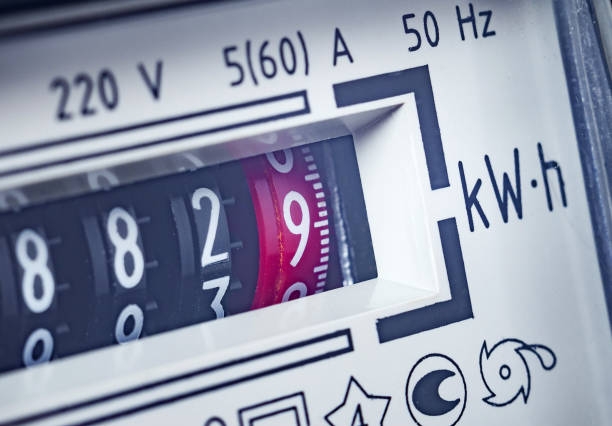
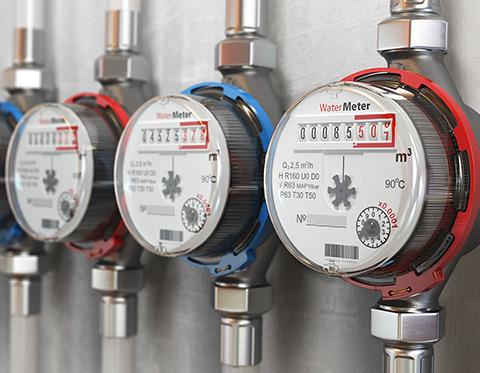
Energy meters, whether installed in residential buildings or in industrial environments, make it possible to understand how energy consumption is distributed across each metering point. However, since most meters currently in operation are not connected, manual intervention—costly and time-consuming—is still required to collect consumption readings.
Pulse meter monitoring: connect and leverage your water, gas and electricity meters
Many buildings, infrastructures and industrial facilities still rely on water, gas or electricity meters equipped with a pulse output. Although these devices are often perfectly functional, they do not easily allow remote access to consumption data.
Thanks to IoT technologies, it is now possible to connect an existing pulse meter to monitor consumption in real time, detect anomalies and improve energy management.
The solution developed by Ineo Sense makes it possible to transform these traditional meters into valuable data sources without replacing the existing infrastructure.
What is a pulse meter?
A pulse meter is a meter equipped with a pulse output that generates an electrical signal each time a unit of consumption is measured.
In practice, each pulse corresponds to a specific quantity of energy or fluid:
1 pulse may correspond to 1 liter of water
or 1 Wh of electricity
or 1 dm³ of gas
These pulses are typically transmitted through:
an S0 output
a dry contact
a Reed contact
Each pulse can be recorded by an external system in order to reconstruct actual consumption over time.
This principle is widely used in energy management, remote meter reading and industrial consumption monitoring.
How does a pulse meter work?
The operation of a pulse meter relies on a simple principle: converting a physical measurement into usable electrical pulses.
The process generally involves four steps.
1. Consumption measurement
The meter measures the flow of a fluid or energy:
water
gas
electricity
heat
2. Pulse generation
Each time a unit of consumption is measured, the meter generates an electrical pulse.
3. Pulse collection
An IoT sensor or remote reading module records these pulses.
4. Data transmission
The data is then transmitted via an IoT network (LoRaWAN, NB-IoT, LTE-M, etc.) to a monitoring platform.
This system makes it possible to monitor consumption remotely and in real time.
Why connect a pulse meter?
Connecting a pulse meter transforms a local measurement into actionable operational data.
The benefits are numerous.
Accurate consumption monitoring
Pulse collection allows consumption to be reconstructed precisely over time, with a high level of granularity.
Anomaly detection
An unusual variation in the number of pulses may reveal:
a water leak
abnormal consumption
faulty equipment.
Energy optimization
Data analysis helps identify sources of waste and improve the energy performance of buildings or industrial facilities.
Automated meter reading
Remote meter reading eliminates manual interventions and simplifies:
multi-site management
internal billing
energy audits.
What types of meters can be connected?
Pulse technology is used in many types of meters.
An IoT remote reading solution can therefore be used to connect:
An IoT pulse meter sensor is connected to the pulse output of the meter.
Pulse recording
The sensor records each pulse generated by the meter.
Data transmission
The data is then transmitted via an IoT network to a monitoring platform.
Visualization and analysis
Users can then access:
real-time consumption
historical data
alerts.
This type of solution is particularly well suited for buildings, urban infrastructures and industrial sites.
IoT solution for pulse meter monitoring with the ESG-Logger-Pulse®
Ineo Sense designs and develops industrial IoT sensors capable of collecting pulses from existing meters and transmitting the data to a monitoring platform.
These solutions allow organizations to:
connect existing meters without heavy installation work
quickly deploy multi-site remote meter reading solutions
centralize consumption data
generate alerts in case of anomalies
improve infrastructure energy management.
The sensors developed by Ineo Sense are designed to operate in demanding environments and rely on long-range communication technologies suited for Smart City and industrial projects.
Ineo‑Sense's answer : l’ESG‑Logger‑Pulse®
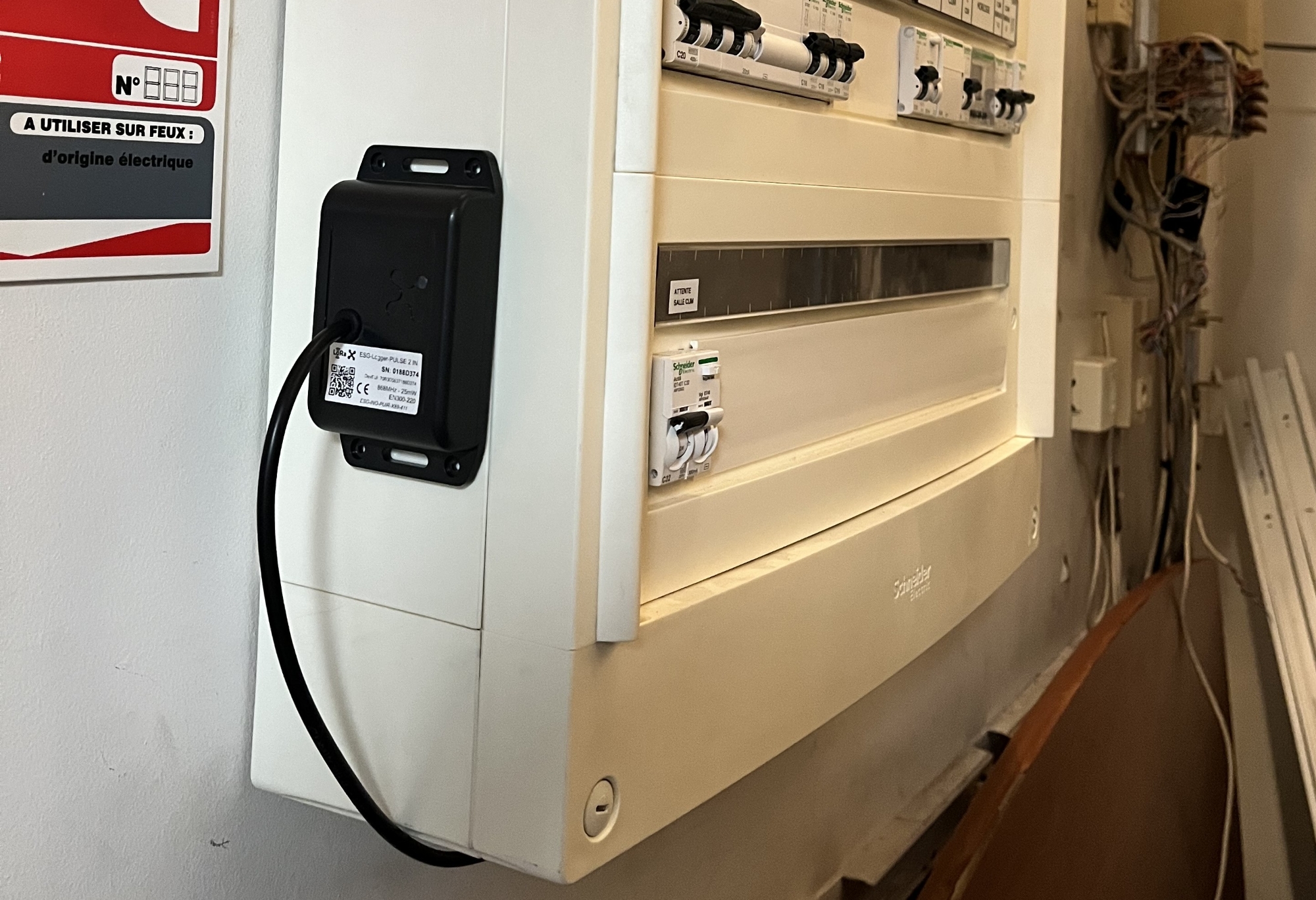
The ESG-Logger-Pulse® transforms any pulse meter into a connected meter in just a few minutes; it clips onto the pulse output, counts the pulses, timestamps them, and transmits the data via long-range LoRaWAN / Clover-Net radio.
Simple installation
Direct connection to one or two pulse meters (water, gas, electricity).
Parameter setting (liters, kWh, m³) via smartphone.
Several years of battery life: zero wiring.
Key features
Remote reading Values are sent in real time to your energy platform or your Building Management System (BMS).
Leak or drift detection An onboard algorithm compares consumption to calendar profiles; an abnormal flow during the night immediately triggers an alert.
Usage profiling Analysis of usage periods to identify peaks and troughs, optimizing energy contracts or maintenance schedules.
Immediate benefits
Bills under control Spot a leaking toilet or a compressor running off-hours before costs escalate.
No service interruption The meter stays in place, production continues uninterrupted.
Accurate indicators by zone or building Allocate costs, set reduction targets, and measure savings.
Compliance and CSR Proof of monitoring for ISO 50001 audits, sustainability reports, and greenhouse gas inventories.
Quick ROI Just one prevented incident or detected leak pays for the sensor.
Application examples
Multi-building hotel Separate monitoring of wings and immediate detection of leaks on the domestic hot water circuit.
Food processing plant Measurement of process hot water and network water, comparison of efficiency.
Student residence Sub-metering of gas by building tower for fair rebilling.
Logistics base Monitoring of fire system meters to detect any sprinkler leaks.
Business sectors
The industry sectors we regulary address for these challenges
An S0 output is a standard interface used on many meters to transmit electrical pulses corresponding to units of consumption. It is widely used in energy monitoring and remote meter reading systems.
What is the difference between a smart meter and a pulse meter?
A smart meter transmits consumption data directly through an integrated communication network.
A pulse meter, on the other hand, only generates pulses that must be collected by an external device or sensor to be transmitted and analyzed.
Can an existing pulse meter be connected?
Yes. This is actually one of the main advantages of pulse meters.
An IoT sensor can be connected to the pulse output of an existing meter, allowing consumption data to be collected remotely without replacing the meter.
How can a pulse meter be read remotely?
A pulse meter can be read remotely by connecting an IoT module capable of collecting pulse signals and transmitting the data to a monitoring platform.
This enables real-time monitoring of consumption data.
What does a pulse correspond to?
Each pulse corresponds to a unit of consumption defined by the meter manufacturer.
For example:
1 pulse = 1 liter of water
1 pulse = 1 Wh of electricity
By counting pulses over time, it is possible to reconstruct the total consumption of the meter.
In Australia, where droughts are becoming increasingly frequent, Ausmeter is deploying a submetering solution that connects older water meters. Thanks to the ESG-Logger-Pulse, consumption is monitored in real time, leaks are detected immediately, and resources are better preserved.
In a world where efficiency and connectivity are paramount, LoRa technology stands out as a revolution in industrial IoT. Discover how this low-power, long-range technology is redefining IoT device communication by delivering innovative and eco-efficient solutions to industries.
The rapid evolution of monitoring technologies has transformed the way companies manage their assets. Smart sensors play a crucial role in this revolution, offering innovative solutions to optimize asset management and improve operational efficiency.
The Internet of Things (IoT) has become an essential lever for companies seeking to optimize their operations and drive growth. By integrating custom IoT solutions, industries can transform their processes, enhance efficiency, and unlock new market opportunities.