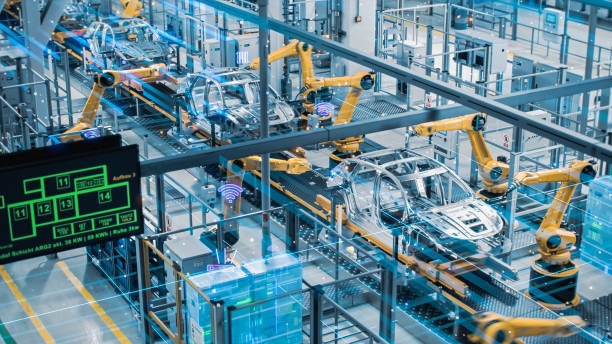
Line-side supply management is a major performance lever in high-paced industries such as automotive, electronics and industrial equipment manufacturing.
In these environments, production continuity depends directly on the ability to supply workstations at the right time, with the right part and in the right quantity. Even a short disruption can destabilize the line, create speed losses and impact OEE.
Beyond logistics, the line-side environment is therefore a critical point where a significant share of industrial performance is determined.
Streamlining flows to eliminate hidden losses
In most factories, synchronization between production and internal logistics still relies on partial signals: paper cards, radio calls or informal communication.
These approaches introduce uncertainty. Information does not circulate efficiently, priorities are not always visible, and gaps between actual needs and supply increase over time.
These issues rarely appear as major breakdowns. Instead, they manifest as a series of micro-events : waiting for materials, unnecessary movements, operator adjustments.
Over time, these losses accumulate and significantly degrade overall performance.
In this context, line-side supply management becomes a key lever to reduce performance losses and improve production continuity.
Challenges of traditional line-side supply
Asynchronous production and logistics rhythms
Production consumes according to its pace and product mix, while internal logistics organizes routes based on its own constraints.
Without reliable and time-stamped information, these two flows become misaligned, leading to shortages or excess.
Non-connected signals
Systems based on paper or local indicators do not allow proper information flow. Supervisors lack global visibility, and urgent needs can go unnoticed.
Risk of shortages and workstation stops
A missing critical component can stop an entire workstation, disrupt the line and lead to production losses.
These short but frequent disruptions are rarely tracked accurately, even though they directly impact real performance.
Hidden costs and excess stock
To compensate for uncertainty, companies increase buffer stock levels. While this secures production, it ties up capital and reduces flexibility.
The Ineo-Sense solution : real-time line-side control
Ineo Sense provides an IoT-based approach to digitalize and synchronize interactions between production and internal logistics.
This approach is built on three complementary components.
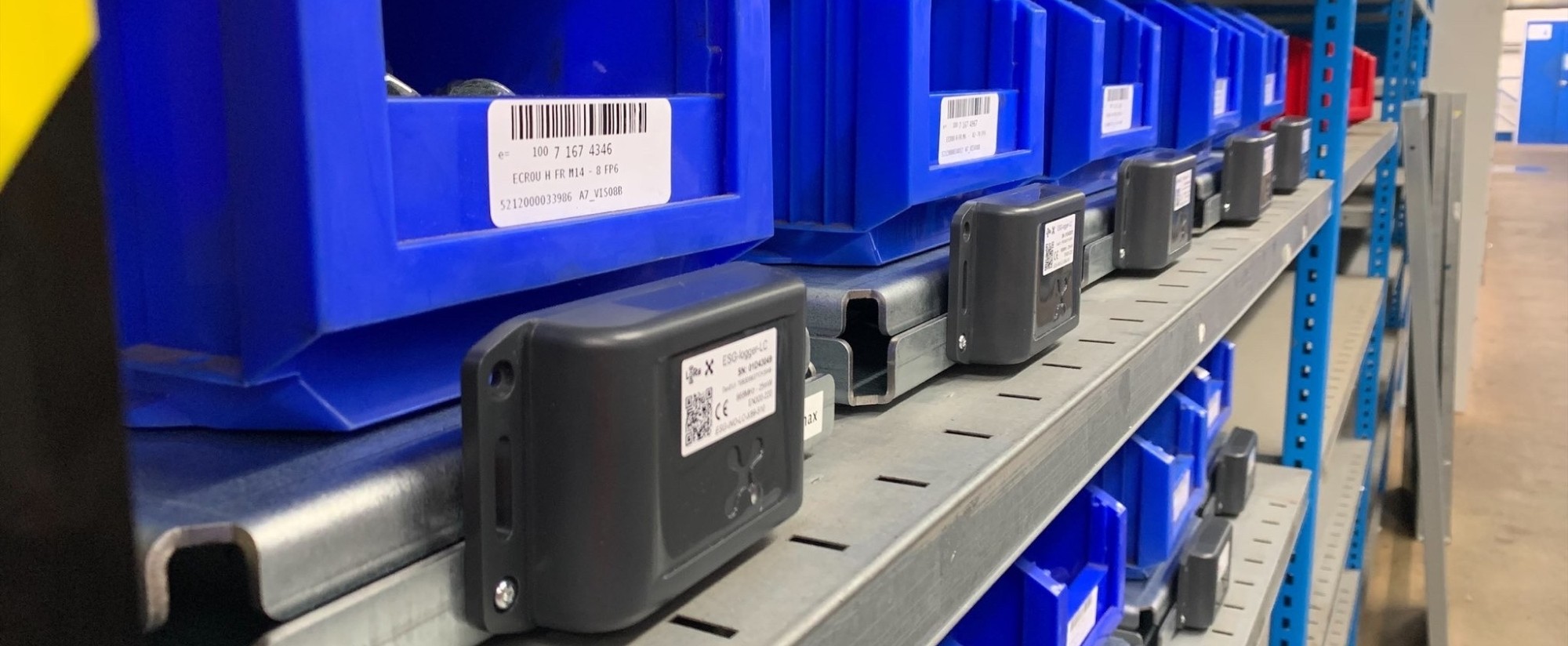
REP-Report-Note® IoT sensor
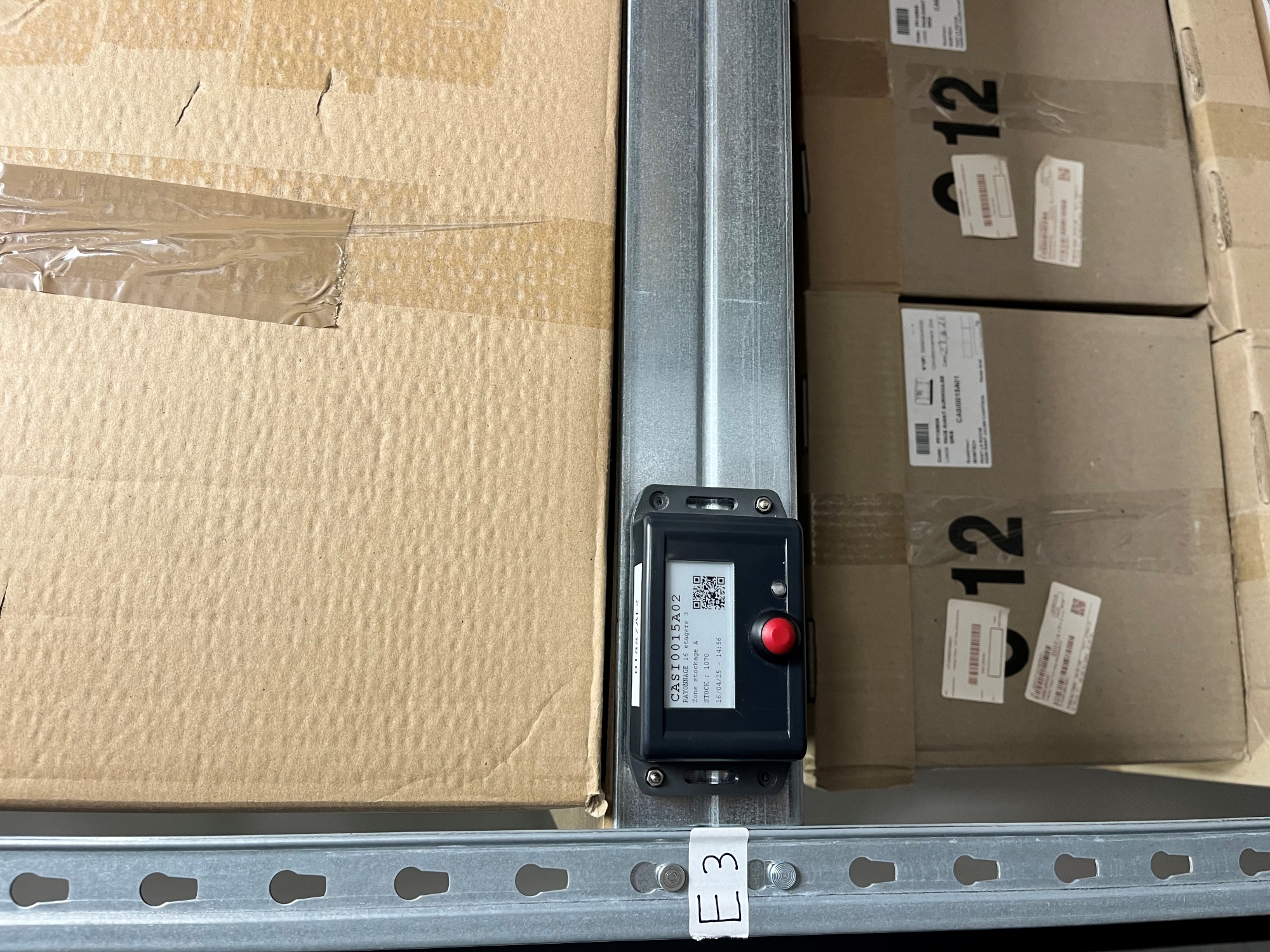
The wireless connected display REP-Report-Note® provides real-time shop floor visibility of key information such as active references, available quantities, request status and quality instructions.
REP-Report-Note-BP® IoT sensor
The REP-Report-Note-BP®, featuring an integrated call button, allows operators to instantly trigger replenishment requests, quality alerts or changeovers.
Information is immediately transmitted and visible, reducing response times and improving operational responsiveness.
ACS-Switch-BP® IoT sensor
The ACS-Switch-BP® connected device, designed for industrial environments, enables multiple types of actions to be managed from a single interface.
It can be used to signal various needs or control local visual indicators while ensuring reliable data transmission to supervision systems.
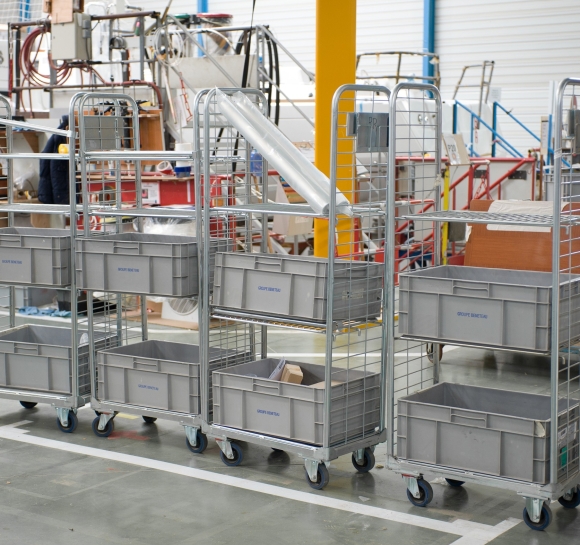
Complement : TRK-Tracer® IoT sensor localization
By combining TRK-Tracer® sensors with carts, racks or containers, it becomes possible to track resources in real time and optimize internal logistics flows.
This visibility reduces search time and improves the efficiency of supply routes.
Key features
The Ineo-Sense solution structures and automates information flows at the line side.
Replenishment requests can be triggered instantly using configurable inputs.
Displayed information is dynamic : references, quantities, priorities or sequence numbers are updated in real time.
Each request is time-stamped and tracked, with visible confirmation for operators.
Digital Kanban replaces paper-based systems with a traceable digital workflow.
Quality alerts can be triggered directly at the workstation and routed to the appropriate teams.
Consumption tracking enables automatic adjustment of reorder thresholds.
Finally, resource localization helps guide logistics teams to the right stock locations and optimize movements.
Operational Benefits
Digitalizing line-side supply management delivers immediate and measurable gains.
Production continuity is significantly improved. Material shortages are anticipated, reducing line stoppages.
Synchronization between production and logisticsis enhanced. Decisions are based on real-time needs rather than assumptions.
Excess stock is reduced, freeing up capital and optimizing space.
Flow traceability provides a strong foundation for continuous improvement.
Most importantly, overall performance is improved. By reducing waiting times, unnecessary movements and flow imbalances, line-side supply management directly contributes to higher OEE.
Application Scenarios
The solution adapts to a wide range of industrial environments.
In automotive assembly, replenishment requests can be consolidated to optimize milk runs and reduce critical shortages.
In mechanical manufacturing, operators can signal material needs or status changes in real time, allowing logistics to adjust flows accordingly.
In electronics manufacturing, multi-reference management enables simultaneous handling of different component types with varying priorities.
In food and cosmetics industries, connected displays ensure secure batch changes and compliance with operational requirements.
Business sectors
The industry sectors we regulary address for these challenges
What is a line-side management sensor and how does it work ?
A line-side management sensor is a wireless IoT device that connects production workstations to the logistics system in real time. It allows operators to trigger replenishment calls, receive dynamic information about active references or priorities, and report anomalies without leaving their workstation. Ineo Sense offers three complementary sensors for this: the REP-Report-Note® (connected display), the REP-Report-Note-BP® (with integrated call button), and the ACS-Switch-BP® (configurable multi-action unit).
How do line-side management sensors help reduce supply shortages ?
Line-side shortages often occur because demand signals travel poorly between production and logistics. IoT line-side management sensors digitize these signals: every replenishment request is triggered with a single action, timestamped, and immediately visible to logistics teams. This reliable, real-time flow of information makes it possible to anticipate needs, optimize rounds, and eliminate micro-stoppages caused by material shortages.
Can line-side management sensors replace paper Kanban ?
Yes. Ineo Sense IoT sensors enable a full digital replacement of paper Kanban. Replenishment calls are triggered electronically from the workstation, with configurable reasons (material shortage, quality alert, changeover). Each request is tracked, timestamped, and visually confirmed to the operator. This digital flow replaces physical cards while delivering complete traceability that traditional Kanban simply cannot provide.
What are the measurable benefits of line-side management sensors on OEE ?
OEE losses linked to line-side management are often invisible because they appear as micro-events : material waits, unnecessary movements, untracked adjustments. Line-side management sensors make it possible to quantify and reduce them. By synchronizing production and logistics based on actual needs, they cut waiting times, reduce proximity overstocks, and directly contribute to improving Overall Equipment Effectiveness.
Are line-side management sensors suitable for multi-reference environments ?
Absolutely. It is precisely in high-variety environments that these sensors deliver the most value. Displayed information (active reference, quantity, priority, sequence) is updated dynamically in real time from the information system. In electronics, for example, multiple component types can be managed simultaneously with different priorities. The solution also adapts to automotive, mechanical engineering, food & beverage, and cosmetics industries.
On its sensitive industrial sites, TotalEnergies deploys a connected padlock to digitize lockout/tagout procedures. Real-time traceability and remote access management enhance security while simplifying operations.
In a world where efficiency and connectivity are paramount, LoRa technology stands out as a revolution in industrial IoT. Discover how this low-power, long-range technology is redefining IoT device communication by delivering innovative and eco-efficient solutions to industries.
The rapid evolution of monitoring technologies has transformed the way companies manage their assets. Smart sensors play a crucial role in this revolution, offering innovative solutions to optimize asset management and improve operational efficiency.
The Internet of Things (IoT) has become an essential lever for companies seeking to optimize their operations and drive growth. By integrating custom IoT solutions, industries can transform their processes, enhance efficiency, and unlock new market opportunities.