In a logistics environment under pressure, with tight flows, multiplying transit points and growing traceability requirements, not knowing where an asset is at any given moment is no longer acceptable.
Whether it's a pallet of temperature-sensitive pharmaceuticals, a container in international transit or an aeronautical part mid-assembly, real-time visibility across the entire supply chain has become as critical an operational lever as inventory management itself.
IoT asset geolocation, also known as asset tracking, delivers precisely this visibility : locating every piece of equipment at any time, detecting anomalies in real time, and maintaining a complete history for audits and operational decisions.
The challenges of traceability in logistics environments
Multiplying transit points
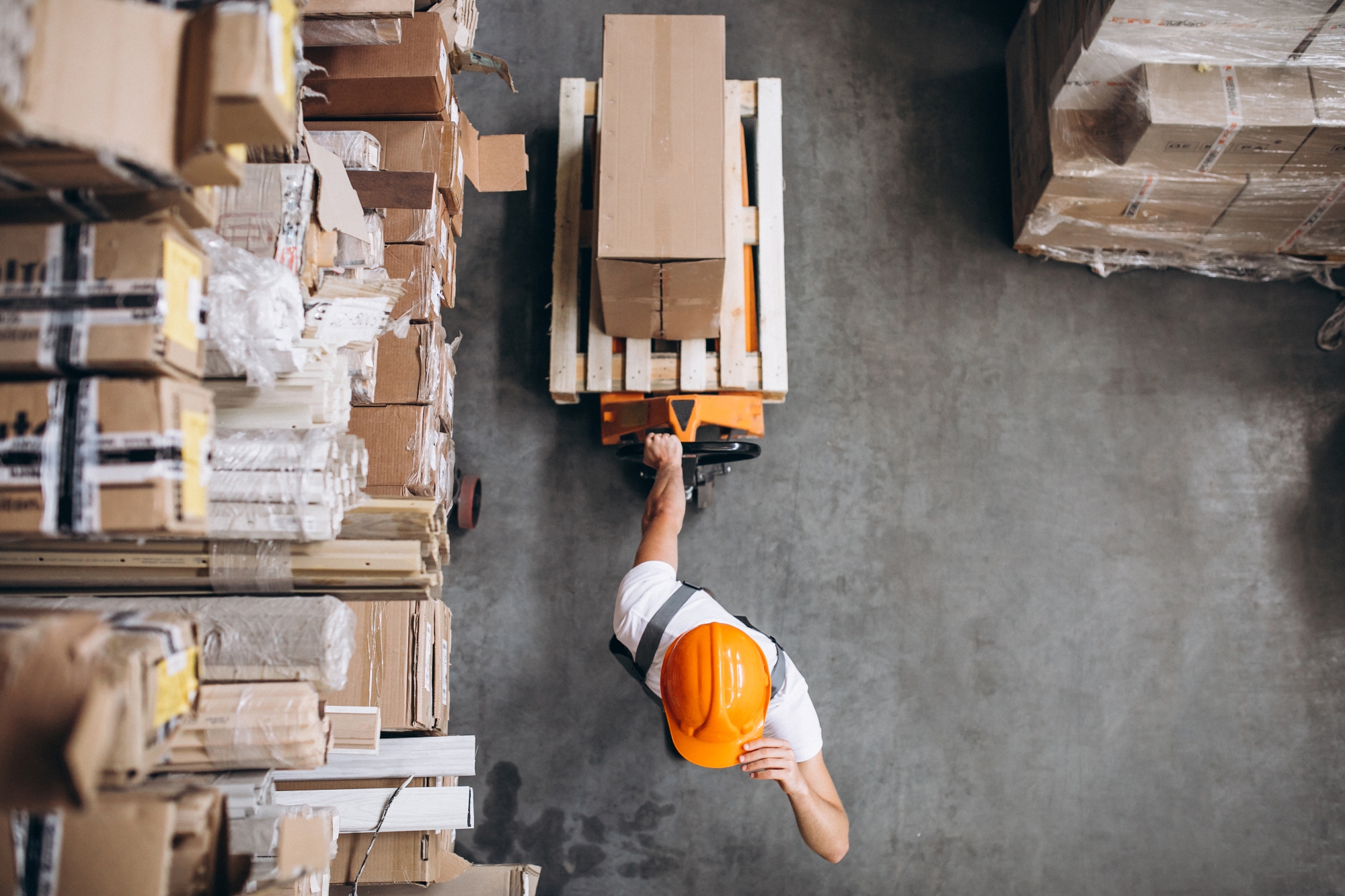
Every logistics tier (warehouse, hub, cross-dock point, loading bay) introduces a risk of visibility gaps.
An asset can sit idle for hours without any alert being triggered.
At scale, these blind spots translate into delivery delays, relocation costs and an inability to meet contractual lead time commitments.
Variable deployment environments
A single pallet may pass through an outdoor loading bay exposed to weather, a climate-controlled warehouse, a closed production workshop and an international truck.
GPS, LoRa and Cell ID signal conditions vary significantly from one environment to the next. A geolocation solution that only covers outdoor, or only indoor, addresses only part of the problem.
Battery life and large-scale deployment constraints
Across a fleet of several hundred or thousands of assets, a solution that requires frequent recharging or regular maintenance is simply not viable.
Fleet management costs end up outweighing the benefits of traceability. Wired solutions, meanwhile, are inherently unsuited to mobile assets.
Multi-year battery life and industrial robustness are not optional features : they are prerequisites.
The Ineo-Sense response : the TRK range for asset tracking
We have designed a complete range of IoT geolocation sensors, the TRK range, to address all asset tracking configurations, from indoor zone identification to GPS geolocation in international transport.
The TRK-Tracer-Cell-GPS® : global coverage, indoor and outdoor
Our most advanced solution, the TRK-Tracer-Cell-GPS®, combines three complementary location technologies (GPS/GNSS, Wi-Fi sniffing and Cell ID) to deliver uninterrupted coverage across the supply chain, from first to last mile.
Built on our Clover-Core® architecture, it offers up to 8 years of battery life thanks to a low-power chipset and intelligent sleep modes.
It also features multi-sensor detection: shocks, movements, tilts, inversions, temperature and humidity. Every event is timestamped and geolocated, enabling a complete asset history to be reconstructed in the event of a dispute or audit.
To understand why combining multiple location technologies is often essential, our article on choosing between GPS, LoRa and Cell ID details the selection criteria by environment and use case.
The TRK-Tracer® and TRK-Tracer-GPS® : for targeted deployments
For deployments that don't require international cellular coverage, the TRK-Tracer® handles indoor zone identification and location via LoRaWAN or Clover-Net®, while the TRK-Tracer-GPS® adds GNSS geolocation for outdoor environments.
These two references cover the majority of asset tracking needs in closed or semi-open logistics environments.
The TRK-Zon® : for zone-based location
The TRK-Zon® is an autonomous LoRa zone beacon that enables virtual perimeters to be defined within a warehouse or on an industrial site.
As soon as an asset fitted with a TRK-Tracer enters or exits a zone, an alert is triggered automatically.
This is the right solution for environments where metric precision isn't required, but where the zone concept is critical.
Operational benefits
24/7 visibility with no blind spots
Centralized dashboards and interactive maps make it possible to locate every asset at any time, whether indoors, outdoors or in transit. Real-time alerts flag any anomaly immediately : shock, zone exit, temperature deviation, without waiting for a field report.
Reduced logistics costs
Real-time geolocation reduces capital tied up in safety stocks, cuts costs associated with logistics emergencies and eliminates time spent manually relocating lost or misplaced assets. Across large fleets, these savings can be substantial.
LoRa technology plays a key role in this optimisation, particularly for large-scale deployments in industrial environments.
Improved quality and regulatory compliance
Timestamped, geolocated archiving of every event provides irrefutable evidence in the event of a dispute, audit or regulatory inspection. For products subject to strict traceability requirements (pharmaceuticals, food and beverage, sensitive electronics), this is a compliance guarantee that goes well beyond simple logistics tracking.
Predictive asset management
The data collected by sensors doesn't just serve to locate: it enables anticipation. Position history, usage frequency, detection of recurring anomalies : this information feeds a proactive approach to fleet management, directly aligned with the intelligent asset management objectives we detail in our dedicated article.
Concrete use cases
Pharmaceuticals : guaranteeing the cold chain
In the transport of vaccines or temperature-sensitive medicines, a single temperature deviation can compromise an entire batch and expose the company to liability.
The TRK-Tracer-Cell-GPS® records every temperature variation, traces the journey of every shipment and triggers real-time notifications if a critical threshold is exceeded. The complete history is archived and exportable for regulatory audits.
On an automotive production site, every part must arrive at the assembly line on time. An undetected delay can cause a line stoppage whose hourly cost is considerable.
By geolocating containers and cartons in real time, logistics teams can anticipate delays, quickly reallocate resources and maintain production pace.
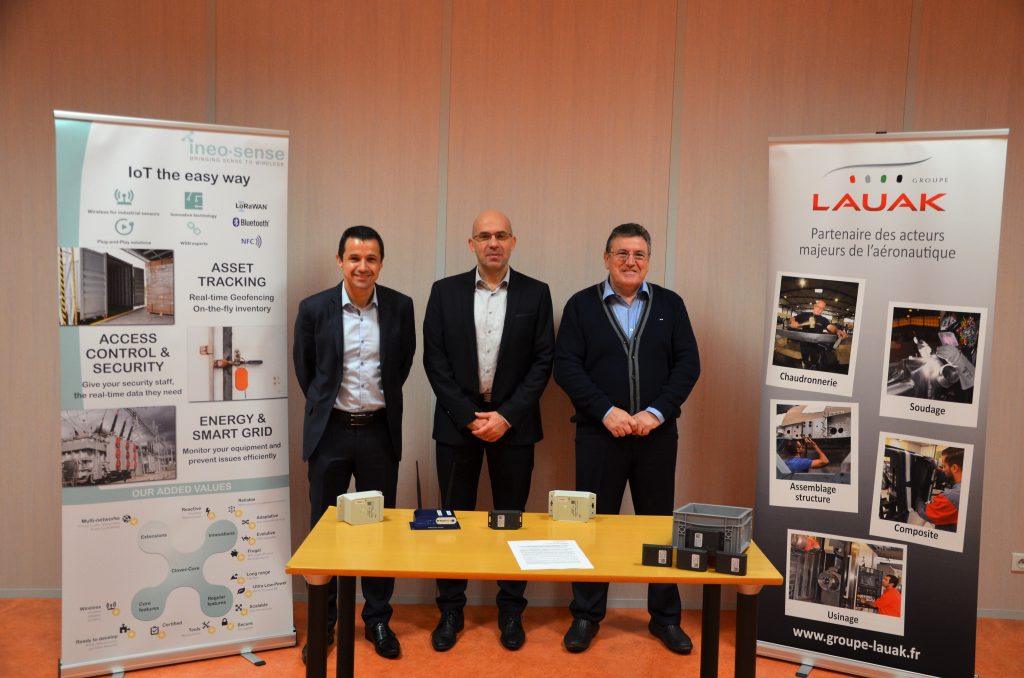
This is precisely the challenge Ineo-Sense addressed for Groupe Lauak across its aeronautical plants.
Industrial cold storage : securing warehouses
By combining shock detection, temperature monitoring and geolocation, cold warehouse managers can reconstruct the complete history of a pallet, from its entry into the cold room to its placement in the picking zone.
An accidental inversion, an unauthorised zone exit or a temperature rise are detected immediately, before the damage becomes irreversible.
Business sectors
The industry sectors we regularly serve for these challenges
Aerospace
Automotive
Rail industry
Logistics
Retail
Manufacturing industry
Industry
Pharmaceutical industry
Construction/Civil Engineering
Discover our range of products dedicated to geolocation
What is the difference between asset geolocation and asset tracking ?
Both terms refer to the same reality : real-time monitoring of the position and condition of physical assets (pallets, containers, equipment, tooling) using connected sensors. "Asset tracking" is the English term commonly used in international logistics and industrial contexts, while "géolocalisation des actifs" is its French equivalent. At Ineo-Sense, we cover both dimensions: geographic location and condition monitoring (temperature, shocks, movements).
Which location technologies are used for asset tracking ?
Several technologies can be used, alone or in combination depending on the environment : GPS/GNSS for precise outdoor geolocation, Wi-Fi sniffing and Cell ID for indoor location or dense urban areas, and LoRaWAN or our proprietary Clover-Net® network for long-range, low-power communication. The choice of technology depends on the required precision, the deployment environment and the target battery life. Our article on choosing between GPS, LoRa and Cell ID will detail these criteria.
Do these solutions work indoors ?
Yes. This is one of the key strengths of our TRK range : it is designed to ensure continuity of tracking between outdoor and indoor environments, with no visibility gap. In a warehouse, the TRK-Tracer® uses the LoRaWAN or Clover-Net® network to report its position relative to fixed TRK-Zon® beacons installed in key zones. The TRK-Tracer-Cell-GPS® extends this coverage with Wi-Fi sniffing and Cell ID for environments where LoRa alone is insufficient. To delve deeper into indoor localization architectures, our article "Indoor Asset Tracking : How to locate without GPS ?" details the technologies and use cases.
What is the battery life of geolocation sensors ?
Our TRK range sensors are designed to operate for several years on battery without intervention. The TRK-Tracer-Cell-GPS® achieves up to 8 years of battery life in optimised mode. This duration depends on data transmission frequency and the active location mode, but is systematically assessed and documented during the project design phase. This is made possible by the IoT durability built into our architecture from the outset.
Do these solutions integrate with our existing systems (WMS, ERP, TMS) ?
Yes. Our sensors communicate via standard protocols (REST API, MQTT, webhooks) compatible with the leading WMS, ERP and TMS platforms on the market. Position, status and alert data feeds into your existing supervision tools in real time, with no need to overhaul your information system. For environments with complex legacy systems, our integration service handles the adaptation.
Can these solutions be deployed at scale, across multiple sites ?
Yes, and this is precisely one of the advantages of our approach. Our Clover-Core® architecture and proprietary Clover-Net® network enable large-scale deployments across multiple sites simultaneously, with centralized fleet management. Our deployment service covers the entire operation : installation, configuration and team training, so that the first sensor is operational on schedule.
The Lauak Group optimizes aerospace production with a wireless IoT solution that locates manufacturing orders in real time across multiple industrial sites. This technology enables prioritization of workflows, reduction of transit times between operations, and significant improvement in meeting delivery deadlines.
In a world where efficiency and connectivity are paramount, LoRa technology stands out as a revolution in industrial IoT. Discover how this low-power, long-range technology is redefining IoT device communication by delivering innovative and eco-efficient solutions to industries.
The rapid evolution of monitoring technologies has transformed the way companies manage their assets. Smart sensors play a crucial role in this revolution, offering innovative solutions to optimize asset management and improve operational efficiency.
The Internet of Things (IoT) has become an essential lever for companies seeking to optimize their operations and drive growth. By integrating custom IoT solutions, industries can transform their processes, enhance efficiency, and unlock new market opportunities.