#SmartCity
10 February 2026
How to connect a pulse meter to an IoT solution
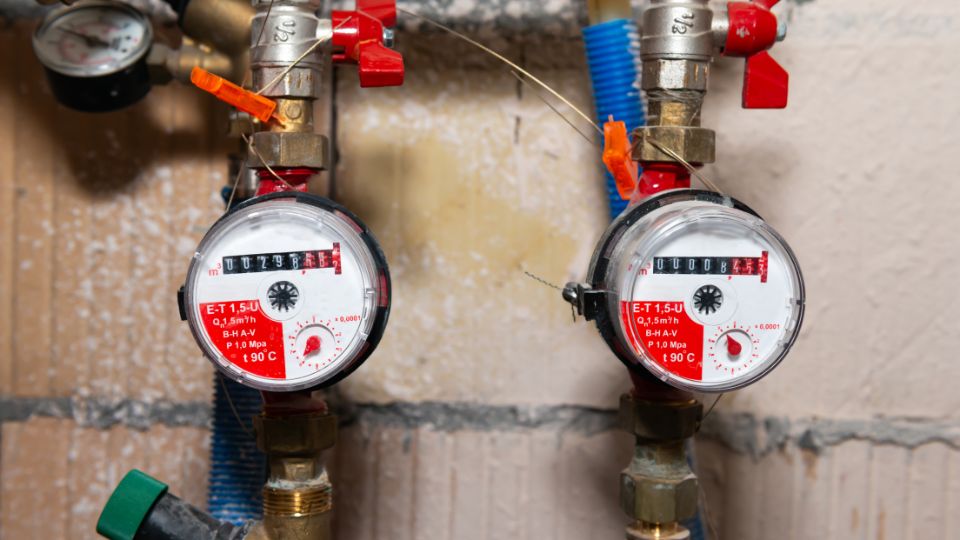
Many buildings, infrastructures and industrial sites already use water, gas or electricity meters equipped with a pulse output. These meters can measure consumption accurately, but they are often limited to manual or local readings.
With the rise of IoT technologies, it is now possible to connect an existing pulse meter to monitor consumption remotely, detect anomalies and improve energy management.
The good news is that in most cases there is no need to replace the meters. A suitable IoT sensor can transform these devices into valuable sources of operational data.
Why connecting existing meters has become a strategic challenge
Controlling energy and fluid consumption has become a major priority for companies, local authorities and infrastructure managers.
Energy regulations, emission reduction initiatives and operational performance requirements are pushing organizations to better understand and manage their consumption.
In this context, having reliable and regular data helps to:
- identify sources of energy waste
- detect abnormal consumption
- improve multi-site management
- support energy optimization strategies
However, in many buildings the existing meters are perfectly functional but not connected. Replacing them often represents a significant investment and major installation work.
Connecting existing meters is therefore a much simpler and more cost-effective solution.
The limitations of manual meter readings
In many organizations, consumption data is still collected through manual meter readings.
This method has several drawbacks.
Infrequent data collection
Readings are often performed:
- once a month
- sometimes once a quarter
This makes it difficult to identify anomalies quickly.
Risk of human error
Manual data entry can lead to:
- reading errors
- data entry mistakes
- missed readings.
No real-time alerts
With manual readings, it is impossible to quickly detect:
- a water leak
- abnormal consumption
- faulty equipment.
This is why more and more organizations are looking to automate meter data collection.
The 3 methods to connect a pulse meter
There are several ways to connect a pulse meter to a monitoring system.
The right approach generally depends on the existing infrastructure, the number of meters and the level of monitoring required.
Using an industrial PLC
In some industrial environments, meter pulses can be connected to a programmable logic controller (PLC).
The PLC collects the pulses and then transmits the data to a monitoring system.
This approach is particularly suitable for industrial sites that already have automation architectures in place.
However, it can become complex to deploy across multiple distributed sites or existing buildings.
Installing a wired data concentrator
Another approach is to connect meters to a data concentrator via a wired network.
The concentrator collects pulses from several meters and sends them to a supervision platform.
This solution can be relevant when meters are located close to each other, but it often requires additional wiring work.
Using an IoT sensor for pulse meters
The rise of IoT technologies has significantly simplified the connection of existing meters.
An IoT pulse meter sensor can be directly connected to the pulse output of the meter.
This sensor:
- records each pulse
- converts pulses into digital data
- transmits the data to a monitoring platform.
IoT sensors typically use long-range, low-power networks such as:
- LoRaWAN
- NB-IoT
- LTE-M.
This approach makes it possible to connect existing meters quickly without heavy installation work, even across multi-site infrastructures.
Common mistakes when connecting a pulse meter
Connecting a pulse meter may seem simple, but some technical mistakes can lead to inaccurate data.
Here are the most common ones.
Incorrect pulse value configuration
Each meter assigns a specific value to each pulse.
For example:
- 1 pulse = 1 liter
- 1 pulse = 10 liters
Incorrect configuration can lead to incorrect consumption data.
Incorrect wiring
Pulse outputs must be wired correctly.
Poor connections can result in:
- lost pulses
- noise or false pulses
- no signal at all.
Insufficient sensor protection
In some industrial or outdoor environments, sensors must be protected against:
- humidity
- temperature variations
- electrical disturbances.
How meter data can be used
Once meters are connected, the collected data can be used to improve infrastructure management.
There are many possible applications.
Consumption monitoring
Data makes it possible to visualize consumption:
- per site
- per building
- per area
- per equipment.
Leak detection
Continuous pulse analysis can help identify:
- abnormal nighttime consumption
- suspicious constant flow
- potential leaks.
Energy optimization
Collected data can be used to:
- identify energy-intensive systems
- adjust energy management strategies
- measure the effectiveness of optimization actions.
Why IoT now simplifies meter connectivity
IoT technologies have fundamentally changed the way technical equipment can be connected.
Thanks to autonomous sensors and long-range communication networks, it is now possible to connect existing meters without modifying the infrastructure.
This approach makes it possible to:
- deploy solutions quickly across multiple sites
- centralize consumption data
- automate meter reading
- improve anomaly detection.
IoT sensors are now one of the most efficient ways to modernize consumption management.
Going further: connecting your pulse meters
Connecting pulse meters is a key step toward improving energy management in buildings, urban infrastructure and industrial sites.
IoT solutions now make it possible to collect pulses from existing meters and transmit the data to a supervision platform without replacing the equipment.