#SmartLogistics
25 May 2026
Indoor asset tracking : how to locate without GPS ?
GPS is an effective answer for tracking assets outdoors.
But as soon as a pallet enters a warehouse, a part joins a production line or a tool disappears into a closed workshop, the satellite signal disappears with it.
This is precisely where most asset tracking projects hit a wall: not during transit between two sites, but inside.
And it's often indoors where visibility gaps cost the most.
A work order stuck in the wrong area of a workshop, a tool that can't be found on a site covering thousands of square metres, a pallet held up in a staging zone without anyone knowing : these situations generate no usable GPS data, but they do generate delays, additional costs and production stoppages.
Why GPS is not enough indoors
A physical problem, not a technical one
GPS works by triangulating satellite signals.
These signals are weak and don't penetrate roofs, thick walls or metal structures. This isn't a limitation of GPS sensors themselves: it's a physical constraint inherent to the technology.
No manufacturer can work around it with a better antenna or more advanced firmware.
The consequence is direct : in a standard warehouse, industrial workshop or storage building, a GPS sensor loses its signal as soon as it crosses the threshold.
The last known position is the building entrance, not the actual location of the asset inside.
What this costs in practice
On an industrial site where hundreds of work orders, tools or components circulate simultaneously, the absence of indoor visibility translates into time lost searching, errors in flow prioritisation and undetected bottlenecks.
For companies working with tight flows or just-in-time delivery, these delays are simply not absorbable.
This was the problem faced by Groupe Lauak across its aeronautical production sites : work orders moving between several workshops with no real-time visibility on their exact position, making any scheduling optimisation impossible.
Indoor location technologies : what exists and what it's worth
LoRaWAN and zone beacons : the robust solution for large spaces
LoRaWAN-based location relies on a simple principle : fixed beacons installed at strategic points in the building (zone entrances, aisle intersections, key workstations) define virtual perimeters.
When an asset fitted with a LoRa sensor enters or exits a zone, the event is detected and reported in real time.
This approach doesn't provide an absolute GPS position: it indicates which zone the asset is in, and since when. It's zone-based location rather than precise coordinate tracking, and it's often sufficient for real operational needs.
Knowing that a work order is in the cutting zone rather than the assembly zone, or that a trolley is in aisle 3 rather than aisle 7, is already enough to make relevant scheduling decisions.
The advantage of LoRaWAN for indoor use is twofold: the range is sufficient to cover large buildings with few gateways, and energy consumption is very low, guaranteeing several years of battery life on the sensors.
Our article Asset tracking : GPS, LoRa or Cell ID ? compares these technologies in detail and their optimal conditions of use.
Wi-Fi sniffing and Cell ID : continuity without dedicated infrastructure
In environments where a LoRaWAN infrastructure hasn't yet been deployed, Wi-Fi sniffing and Cell ID provide approximate indoor location by leveraging existing Wi-Fi networks and cellular antennas.
Precision is lower (from a few tens to a few hundred metres depending on access point density), but these technologies offer immediate coverage with no prior installation.
They play a particularly useful role in transition zones, where LoRa coverage is partial or where gateway installation is constrained.
Combined with GPS for outdoor phases, they ensure tracking continuity without any visibility gap across the entire logistics or production chain.
BLE (Bluetooth Low Energy) : short-range precision
BLE enables more precise location than LoRa, in the order of a few metres, by relying on a mesh of Bluetooth beacons.
It is particularly suited to environments where zone precision isn't sufficient and where an asset needs to be located at the exact position of a shelf or workstation.
Its main constraint is limited range (a few tens of metres per beacon), which requires a dense mesh and therefore a more significant infrastructure investment.
How to architect an indoor location project
Start from the precision need, not the technology
The first mistake in an indoor location project is choosing the technology before defining the level of precision actually required.
In most operational cases, zone precision is sufficient : knowing which zone of a workshop an asset is in already makes it possible to significantly improve scheduling and reduce search time.
If exact-location precision is needed, for example to locate a specific tool among hundreds in the same workshop, a BLE architecture or a LoRa and BLE combination needs to be considered, with the additional infrastructure costs this implies.
Map zones before deploying
A successful indoor location project starts with a precise mapping of the zones to be covered : identification of entry and exit points, transit zones, key workstations and potential dead zones.
This mapping determines the number and position of beacons or gateways to deploy, and therefore the real cost of the project.
On a complex industrial site, this mapping phase can represent a significant share of the preparatory work. But it's what determines the quality of coverage and the relevance of the data collected.
Plan indoor/outdoor continuity from the outset
For assets that transit between indoors and outdoors, as is the case in most logistics and production chains, indoor and outdoor location should not be treated as two separate projects.
Tracking continuity between the two environments must be thought through from the architectural design stage.
This is the approach we adopted with the TRK range : sensors switch automatically between GPS, LoRaWAN and Cell ID based on the detected environment, with no manual intervention and no gap in the data reported.
For temperature-sensitive assets moving between cold storage warehouses and transport, this indoor/outdoor continuity is particularly critical. Our article Cold chain : how IoT secures traceability details the architectures suited to this use case.
Our integration service handles the configuration of these switches based on each site's specific characteristics.
What this looks like in real conditions
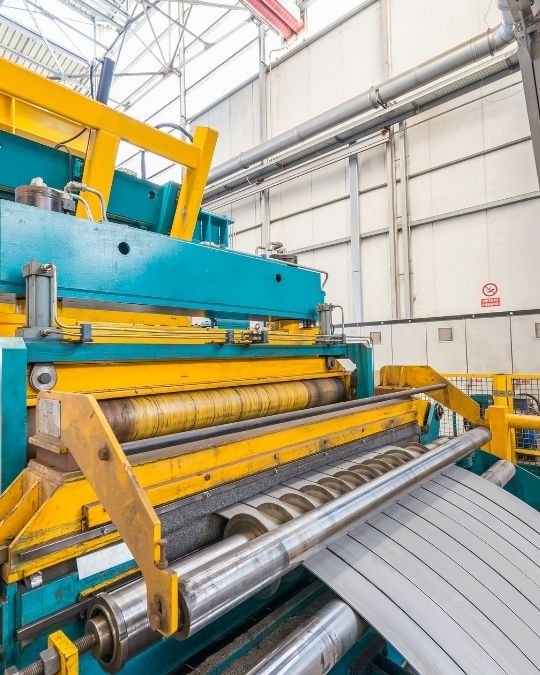
At Groupe Lauak's aeronautical sites, the deployment of TRK-Tracer® sensors combined with TRK-Zon® beacons made it possible to track more than 31,000 work orders in real time as they circulated between several workshops.
The result : an operational progress rate (OPR) multiplied by 3, transit times between operations reduced by 20%, and return on investment reached within 18 months.
It wasn't centimeter-level GPS precision that made this result possible : it was real-time zone visibility, applied at scale across a 100% indoor environment.
Are you looking to locate your assets indoors without relying on GPS ?
Indoor location without GPS isn't a constraint to work around : it's a use case in its own right, calling for a dedicated architecture.
LoRaWAN for coverage of large industrial spaces, Wi-Fi sniffing and Cell ID for continuity in transition zones, BLE for exact-location precision : each technology has its place, and it's their intelligent combination that makes the difference between a project that delivers and one that disappoints.
To go further on the concrete solutions available for your environment, our asset tracking page details the products, use cases and architectures we deploy with our industrial and logistics clients.